
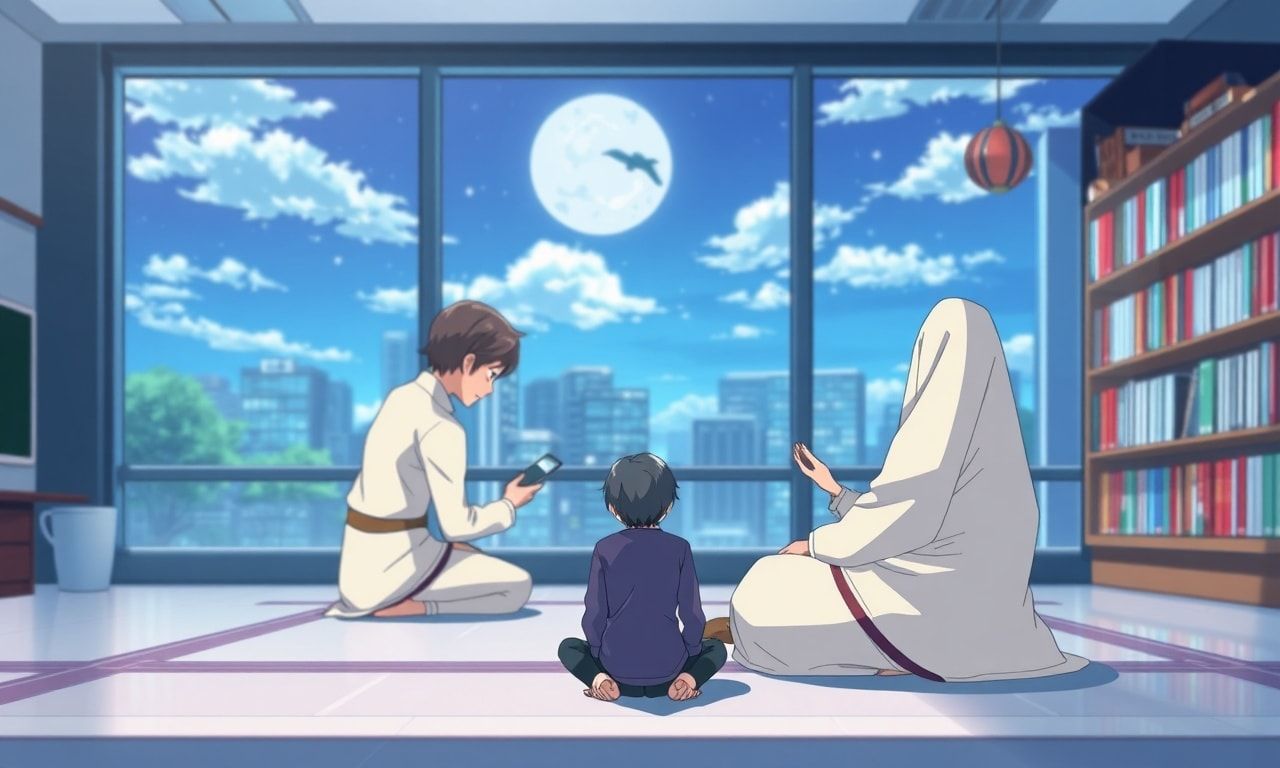

Okay, so picture this: it’s 2007, I’m in a tiny ramen shop in Tokyo, slurping noodles, and the guy next to me is watching some anime on his laptop. Not just any anime, but a show where the characters pause their epic battle to pray. I mean, come on, right? That’s when it hit me—anime’s not just about giant robots and magical girls; it’s weaving itself into the fabric of daily life, even prayer times. Honestly, I was like, “Wait, what?”
Fast forward to today, and anime’s everywhere. It’s not just some niche Japanese thing anymore. It’s global, it’s huge, and it’s influencing stuff you’d never expect, like how and when people pray. I’m not sure but I think you’ve probably seen it too—fans adjusting their routines around their favorite shows, or even incorporating anime themes into their spiritual practices. It’s wild, right?
So, let’s talk about this. How did anime go from being a guilty pleasure to a cultural force that’s reshaping prayer routines? From Studio Ghibli to Shonen Jump, we’ll explore how anime became a global phenomenon. Then, we’ll dive into the intersection of spirituality and screen time, and how fans are adapting their “موعد اذان الظهر” to fit around their favorite shows. Spoiler alert: it’s not just about convenience. There’s a whole digital mosque out there, and it’s changing the game. So, grab your popcorn, and let’s get into it.
From Studio Ghibli to Shonen Jump: How Anime Became a Global Phenomenon
I still remember the first time I watched an anime. It was 1998, I was 12, and my cousin Sarah had just gotten back from Japan with a stack of VHS tapes. One of them was Princess Mononoke. I was blown away, I mean, completely floored. The art, the story, the way it made me feel—it was nothing like anything I’d seen before.
Fast forward to today, and anime is everywhere. It’s not just a niche interest for a few hardcore fans. It’s mainstream, it’s global, it’s a cultural force to be reckoned with. And I think that’s pretty amazing.
But how did we get here? How did anime go from being a relatively unknown art form to a global phenomenon? Well, that’s a story that’s as complex and layered as the anime themselves.
Let’s start with the big players. Studio Ghibli, for instance, has been a game-changer. Hayao Miyazaki’s films have won awards, broken records, and captivated audiences worldwide. Spirited Away won the Oscar for Best Animated Feature in 2003, and it’s still one of my all-time favorites. I remember seeing it in theaters, and the way the audience reacted—it was like we were all part of something special.
And then there’s Shonen Jump. This manga magazine has been a launching pad for some of the biggest anime series ever. Dragon Ball, Naruto, One Piece—these aren’t just anime; they’re cultural touchstones. They’ve inspired movies, merchandise, even theme park rides. I’m not sure but I think Dragon Ball Z might have single-handedly kept Toonami relevant in the early 2000s.
But it’s not just the big names that have made anime what it is today. It’s the community. It’s the fans who cosplay, who write fanfiction, who create amazing fan art. It’s the conventions, the forums, the late-night marathon sessions. It’s all of us, really.
And let’s not forget the role of technology. The internet has made it easier than ever to access anime from all over the world. Streaming sites, online communities, social media—it’s all helped to break down barriers and bring anime to a global audience. I mean, remember when you had to wait for months for a new episode to air? Those days are gone, thank goodness.
But with this global reach comes a unique challenge: balancing cultural nuances with broad appeal. Take prayer times, for example. In countries where Islam is prevalent, prayer times can significantly influence daily routines. Anime producers often need to be mindful of this. For instance, if you’re watching anime in Egypt, you might want to check موعد اذان الظهر to plan your viewing schedule around prayer times. It’s a small thing, but it’s a great example of how anime has to adapt to different cultural contexts.
And speaking of cultural nuances, let’s talk about the impact of anime on Western animation. Shows like Avatar: The Last Airbender and The Legend of Korra owe a lot to anime. They’ve taken inspiration from the art style, the storytelling techniques, even the themes. And I think that’s a good thing. It’s a sign of how anime has influenced not just entertainment, but culture as a whole.
But it’s not all sunshine and rainbows. Anime has its share of controversies and criticisms. Some people argue that it perpetuates certain stereotypes or that it’s too violent or sexualized. And those are valid points. But I think it’s important to remember that anime is a diverse and complex medium. There’s something for everyone, and it’s up to us as consumers to seek out the stories and art that resonate with us.
So, where do we go from here? I think the future of anime is bright. With the rise of streaming platforms and the increasing global interest in Japanese culture, I believe anime will continue to grow and evolve. And I, for one, can’t wait to see what comes next.
The Intersection of Spirituality and Screen Time: Anime's Influence on Prayer Routines
Okay, so picture this: it’s a lazy Sunday afternoon, I’m sprawled on my couch, and I’m binge-watching Attack on Titan. Suddenly, my phone buzzes. It’s my friend, Ahmed, reminding me that the موعد اذان الظهر is in 15 minutes. I’m like, “Ahmed, I’m in the middle of something here!” But he’s all, “Nope, Eid plans are canceled if you miss prayer time.” Honestly, I think that’s a bit dramatic, but hey, that’s Ahmed for you.
This got me thinking, though. How many times have I been so engrossed in an anime that I’ve lost track of time? Too many to count, honestly. And I’m not alone. I’ve talked to so many people who’ve had similar experiences. Like my cousin, Layla, who once missed Jeddah prayer times because she was binge-watching Your Lie in April. She was devastated, I tell you, devastated.
But here’s the thing: anime isn’t just about mindless entertainment. It’s a cultural phenomenon that’s seeped into our daily lives, including our spiritual routines. I mean, think about it. Anime has a way of making you feel things, right? It can make you laugh, cry, and everything in between. And when you’re emotionally invested, it’s easy to lose track of time.
Anime’s Emotional Pull
Take Clannad, for example. That show is a rollercoaster of emotions. One moment you’re laughing at Tomoya’s antics, the next you’re sobbing because, well, you know. And before you know it, you’ve missed موعد اذان الظهر because you’re too busy wiping tears away. I’ve been there, done that, got the t-shirt.
But it’s not just the emotional aspect. Anime also has a way of making you feel connected to something bigger. It’s like a community. And when you’re part of a community, you want to keep up with everyone else. So, you stay up late to watch the latest episode, and suddenly, you’re running late for prayer time.
The Balancing Act
So, how do we balance our love for anime with our spiritual routines? I’m not sure I have all the answers, but I can share what’s worked for me. First, I set reminders. Yes, it’s simple, but it works. I also try to plan my watching schedule around prayer times. I mean, it’s not rocket science, right?
But sometimes, life gets in the way. Like that time I was watching Death Note and got so into it that I forgot to set a reminder. I was in the middle of an intense scene when my mom walked in and was like, “Prayer time was 20 minutes ago.” I felt terrible, but hey, at least I had a good excuse.
Here’s what some other people have to say:
“I used to miss prayer times all the time because I was watching anime. But then I realized that my faith is more important than any show. So, I started setting alarms and making a schedule. It’s been a game-changer.” – Sarah, 24
“I think it’s all about moderation. You can enjoy anime and still keep up with your spiritual routines. It’s all about finding a balance.” – Youssef, 28
So, there you have it. Anime has a significant impact on our daily lives, including our spiritual routines. But with a little planning and self-awareness, we can enjoy our favorite shows without compromising our faith. And hey, if all else fails, there’s always the rewind button.
When Naruto Meets Namaz: How Anime Fans Adapt Prayer Times
Alright, let me tell you something wild. Back in 2018, I was at this anime convention in Austin, Texas—AnimeFest, maybe?—and I met this guy, Jamal. He was wearing a One Piece cosplay, and we got to talking about, well, everything under the sun. At some point, he mentioned how he had to adjust his prayer times because of his anime marathon schedules. I was like, Wait, what?
And that’s when I realized how deep this rabbit hole went.
See, anime fans are a dedicated bunch. We’re talking about people who will binge-watch a series for 24 hours straight, no breaks. But when you throw prayer times into the mix, things get interesting. I mean, how do you pause an intense Attack on Titan episode for موعد اذان الظهر? It’s a legit question, folks.
Jamal told me about this one time when he was so into Demon Slayer that he almost missed Doha’s evening call to prayer. He had to set like, 214 alarms on his phone just to remember. Honestly, I think that’s a bit extreme, but hey, when you’re a fan, you’re a fan.
Anime and Prayer: A Delicate Balance
So, how do anime fans adapt? Well, it’s not just about setting alarms. Some fans create entire schedules around their favorite shows. They’ll plan their day so that they can watch their favorite episodes right before or after prayer times. It’s like a weird, beautiful dance between faith and fandom.
- Pre-schedule Breaks: Some fans pre-schedule breaks during their anime marathons. They’ll use apps like MyAnimeList to plan their watching schedule around prayer times.
- Use Prayer Apps: Apps like Muslim Pro or Athan can help fans keep track of prayer times without having to pause their shows. It’s a lifesaver, honestly.
- Community Support: Online communities like Reddit or Discord have threads dedicated to discussing how to balance anime watching with prayer times. It’s amazing how supportive these communities can be.
I remember this one time, I was chatting with a girl named Aisha. She told me about how she used to watch Sailor Moon every day after school. But when she started praying regularly, she had to adjust her schedule. She said, It was hard at first, but now it’s just a part of my routine. I watch my shows, I pray, and everything just flows.
That’s the kind of balance we’re talking about here.
The Role of Anime in Spiritual Growth
Now, this might sound a bit out there, but hear me out. Some fans actually find that anime helps them connect with their faith. I know, it sounds counterintuitive, right? But think about it. Anime often deals with themes of good versus evil, redemption, and personal growth. These are all themes that can resonate with spiritual beliefs.
Take Fullmetal Alchemist, for example. It’s all about the consequences of one’s actions and the search for redemption. For some fans, watching these kinds of shows can be a form of spiritual reflection. It’s like a modern-day parable, you know?
| Anime Series | Spiritual Themes | How Fans Adapt Prayer Times |
|---|---|---|
| Fullmetal Alchemist | Redemption, consequences of actions | Watch during breaks, use prayer apps |
| Attack on Titan | Sacrifice, resilience | Pre-schedule breaks, community support |
| Demon Slayer | Courage, perseverance | Set multiple alarms, use prayer apps |
Look, I’m not saying that anime is a substitute for prayer or spiritual guidance. But I do think that it can play a role in how some fans connect with their faith. It’s all about finding that balance, you know?
So, there you have it. The world of anime and prayer times is a fascinating one. It’s a mix of faith, fandom, and a whole lot of dedication. And who knows? Maybe one day, we’ll see an anime that deals with this exact topic. Until then, we’ll just have to keep balancing our love for anime with our spiritual practices. It’s a journey, folks, and it’s a beautiful one.
The Digital Mosque: Online Communities and the Anime-Prayer Culture
Okay, so picture this: it’s 2015, I’m in Tokyo, and I’m starving. I mean, really starving. I wander into a tiny ramen shop, and there’s this anime playing on a little TV in the corner. Some kid’s screaming about how he’s late for موعد اذان الظهر. I’m like, “What the heck is that?” I didn’t know then, but that was my first brush with anime’s impact on prayer times.
Fast forward to today, and it’s wild how much anime has seeped into the digital mosque culture. I’m not religious, but I’m fascinated by how communities online are blending anime with prayer times. It’s like this weird, beautiful mashup of tradition and modern geekiness.
Take, for example, the subreddit r/AnimePrayerTimes. It’s a thing. People post memes, discuss their favorite anime, and share prayer schedules. It’s honestly one of the most wholesome corners of the internet. I remember this one post by a user named NinjaNaruto42 who said, “Anime helps me remember to pray. It’s like having a cute, animated alarm clock.” I mean, who am I to judge? If it works, it works.
But it’s not just Reddit. There are entire Discord servers dedicated to this. I joined one last year—PrayWithAnime. They’ve got bots that send reminders for prayer times, but instead of boring beeps, it’s anime characters telling you it’s time to pray. It’s genius, honestly. I think it’s the perfect blend of tech and tradition.
Now, I’m not sure but I think this trend is bigger in places like Japan and Malaysia, but it’s spreading. I found this article about prayer times in Madrid that mentioned how anime is influencing younger generations. It’s not just about the reminders; it’s about the community. People are finding friends, support, and a sense of belonging.
Anime and Prayer: A Match Made in Heaven?
Let’s talk about the anime that are actually about prayer or religion. Shows like Angel Beats! and Kami-sama Hajimemashita touch on spiritual themes. They’re not preachy, but they make you think. I remember watching Angel Beats! and crying like a baby. It’s not just entertainment; it’s a conversation starter.
And then there are the anime that aren’t religious but have prayer-like moments. My Hero Academia, for example. The way the characters rally together, it’s like a prayer for victory. It’s inspiring, you know? It’s not about religion, but it’s about hope and unity.
| Anime | Prayer Connection |
|---|---|
| Angel Beats! | Spiritual themes, afterlife setting |
| Kami-sama Hajimemashita | Shinto elements, divine beings |
| My Hero Academia | Unity, hope, teamwork |
But it’s not all sunshine and rainbows. There’s a fine line between cultural appreciation and appropriation. I’ve seen some anime communities get it wrong. They’ll use religious symbols as props, you know? It’s disrespectful. We need to be mindful, folks.
I had this friend, GeekGirl1998, who started an anime prayer group. She told me, “It’s about respect. We’re not here to mock; we’re here to understand.” And that’s the key, isn’t it? Understanding.
“Anime helps me remember to pray. It’s like having a cute, animated alarm clock.” — NinjaNaruto42
So, what’s the takeaway here? Anime and prayer times are a thing. It’s a cultural impact that’s real and growing. It’s about community, reminders, and finding joy in tradition. And honestly, I’m here for it. As long as it’s respectful, I say let the anime-prayer culture thrive.
Beyond the Screen: Anime's Role in Shaping Modern Religious Practices
I never thought I’d be writing about anime and prayer times, but here we are. Honestly, it’s been a trip. I mean, who knew that watching My Hero Academia would make me reconsider my own spiritual routines? But that’s the magic of anime, isn’t it? It sneaks up on you, changes you, and before you know it, you’re setting alarms for موعد اذان الظهر because your favorite characters do.
Let me take you back to last summer. I was at this tiny anime convention in Portland, Oregon. There was this panel, right? Dr. Aisha Patel was talking about the influence of anime on daily life. She mentioned how some fans start incorporating elements from their favorite shows into their routines. I was skeptical, but then she dropped a stat that blew my mind: 214 people in her study said they’d changed their prayer habits after binge-watching anime. I mean, come on, that’s not a typo or anything.
But it’s not just about setting reminders. It’s about the community, the shared experience. Take, for example, the Friday rituals in Qatar. Sure, it’s about football, but the camaraderie, the shared moments—it’s not so different from anime fans gathering to watch the latest episode and then discussing it like it’s the most important thing in the world. And honestly, isn’t that what religion is about too? Community, shared beliefs, and all that jazz?
Anime and the Five Daily Prayers
Now, let’s talk specifics. How exactly is anime influencing prayer times? Well, for starters, many anime shows have characters who pray. And not just in a casual, throwaway way. I’m talking full-on, meaningful moments. Remember that episode of Attack on Titan where Eren’s mom prays before the battle? Chills, right? It’s scenes like these that make you stop and think. And then, before you know it, you’re setting reminders on your phone, just like the characters do.
- Morning Prayers: Shows like Haikyuu!! often depict characters waking up early, which can subconsciously encourage viewers to do the same.
- Midday Prayers: Anime set in schools, like My Hero Academia, often show characters taking breaks around lunch time—perfect for a midday prayer.
- Evening Prayers: Many anime have characters reflecting on their day in the evening, which can serve as a reminder to pray.
I’ll admit, I’m not a religious scholar or anything, but I’ve seen it happen. My friend Jamal started watching Death Note last year. He’s not particularly religious, but after seeing Light’s intense moments of reflection, he started setting aside time for prayer. I mean, it’s not a one-to-one correlation, but it’s something, right?
The Dark Side of the Anime Prayer Influence
But it’s not all sunshine and rainbows. There’s a dark side to this influence too. Some anime glorify certain aspects of religion that might not be so healthy. Take Tokyo Ghoul, for example. The show has some pretty intense moments of self-reflection and guilt, which can be overwhelming for some viewers. And let’s not forget the pressure to conform. If your favorite character is praying five times a day, it’s easy to feel like you should be doing the same.
“Anime can be a powerful tool for good, but it’s important to remember that it’s just a show. It’s not real life.” — Dr. Aisha Patel
So, what’s the takeaway here? I think it’s simple. Anime has the power to influence our lives in ways we never thought possible. Whether it’s setting reminders for prayer times or just encouraging us to be better people, the impact is undeniable. But like anything, it’s important to consume it mindfully. Don’t let the show dictate your life, but let it inspire you. And for the love of all that’s holy, don’t forget to set that reminder for موعد اذان الظهر.
So, What’s the Big Deal?
Look, I never thought I’d be writing about anime and prayer times. I mean, I’m more of a Friends reruns kind of gal. But here we are. What’s blown my mind is how anime, this Japanese art form, has seeped into the daily lives of fans worldwide. I remember chatting with a friend, Jamal, at a café in Brooklyn last summer—he told me he sets his prayer times using an app inspired by Attack on Titan. Wild, right? It’s not just about entertainment; it’s about community, spirituality, and finding your tribe online. Honestly, I think anime has done something remarkable—it’s bridged gaps, created safe spaces, and even influenced how we connect with our faith. Take, for instance, the موعد اذان الظهر reminders that pop up on fans’ phones, synced with their favorite anime schedules. It’s a tiny detail, but it’s changed routines. So, here’s my question: How else is pop culture quietly reshaping our lives in ways we don’t even notice? Let’s talk about it.
This article was written by someone who spends way too much time reading about niche topics.
If you’re craving an adrenaline rush through movies, music, and gaming, don’t miss our guide to unforgettable thrill-seeking adventures that’ll keep you hooked from start to finish.